A Thousand Breakable Toys: How AI Agents Turn Side Projects into Learning Superpowers
How AI agents can amplify developer creativity by taking over mechanical tasks and making room for creative work.
In the book Apprenticeship Patterns the authors introduce Breakable Toys, a powerful learning pattern for developers. The idea is simple, but it has big implications: side projects are the perfect guinea pigs for experimenting with new technologies, concepts, and tools, because they offer a safe environment to “break things” and learn by doing.
In this article, I invite you to explore with me how AI agents are supercharging this pattern, taking it far beyond what was possible just a year ago
Project-based Learning
I’ll open this article with something I strongly believe: the best way to learn is to roll up your sleeves and get your hands dirty. This approach to learning, also known as Project-based Learning, is powerful precisely because it’s intentional. You build a project with a clear learning goal in mind.
For example, if the goal is to learn how to automate personal workflows, you might choose n8n to automate how your emails get organized. In that case, you’d be learning automation concepts and a new tool for it at the same time.
Breakable Toys
Project-based Learning is the foundation that lets the Breakable Toy pattern emerge. A breakable toy is a project that provides a safe, low-friction environment to try new things, no matter how crazy the idea. It enables spontaneous learning by removing barriers to entry, and it also brings more serendipity to learning.
It doesn’t matter which side project serves this purpose. For some, it’s a personal blog; for others, a document organization tool. What matters is that it’s a project you maintain over time. That way, there’s no friction to get started, because the project setup is already done. It’s yours, and you can do whatever you want with it, with no one to judge you. It’s liberating, and it frees you to learn.
I’m talking about the experience of trying something new in a side project, like applying that cutting-edge tool we never got a chance to use at work, of feeling firsthand all the problems that come up when we try it for the first time, because we challenged ourselves to try even knowing it would be hard. The experience of overcoming those obstacles and the gift of seeing our efforts rewarded with working software at the end. A smile on your face, a sense of accomplishment, and the lesson properly etched into long-term memory, not just memorized, but earned through effort and experience.
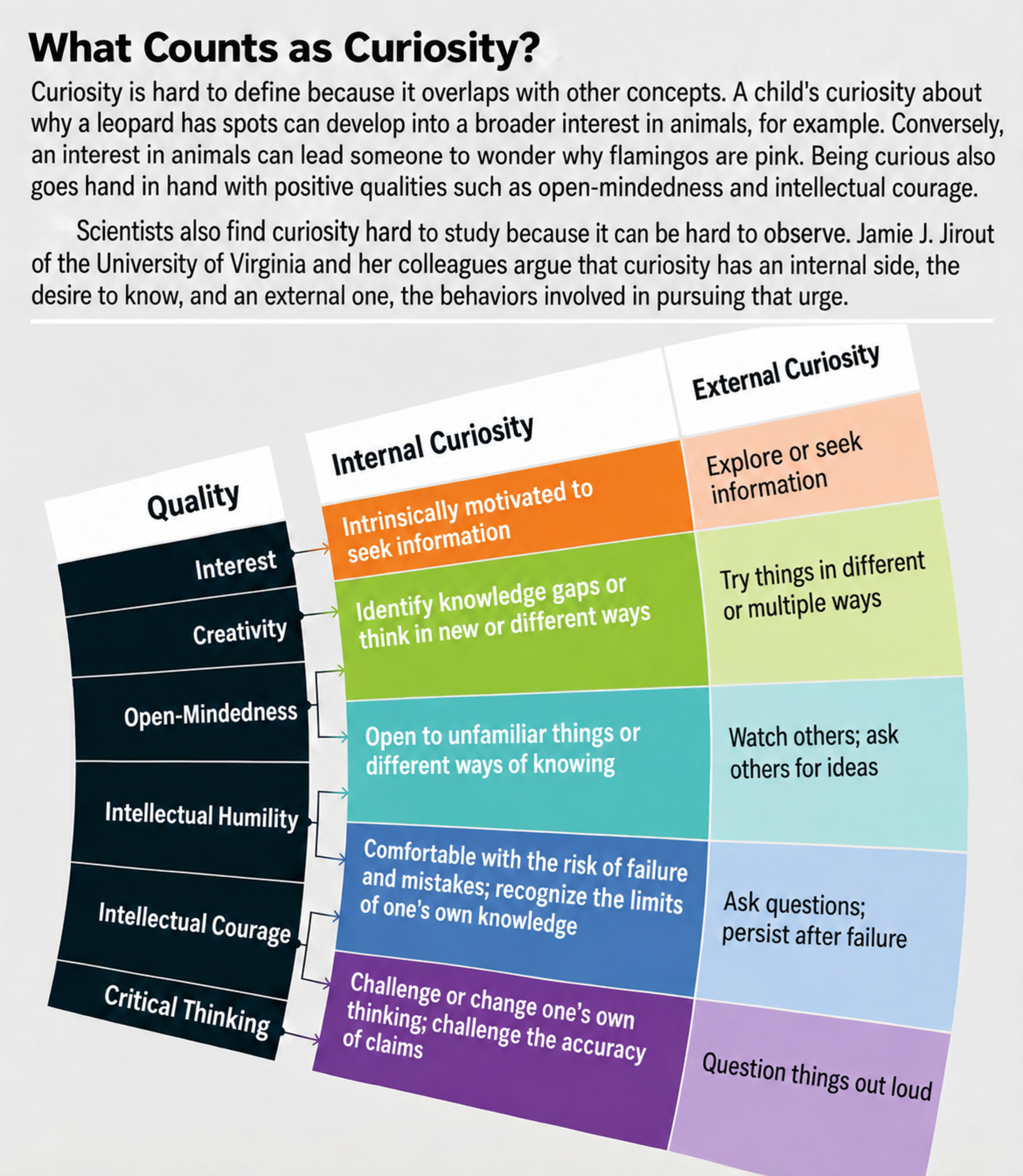
These moments of flow offer optimal learning, and one way to increase the odds of getting into flow is to follow our curiosity. Curiosity works like a compass that points toward the unknown and naturally places us at the edge of our knowledge and mastery of a subject.
Curiosity as a Learning Instrument
The Breakable Toy pattern is perfect for curious minds who love to learn. It hugely amplifies learning and creates opportunities for flow.
This Blog Is a Breakable Toy
Born from the desire to share ideas and lessons, this blog has served many purposes over the years and has been the guinea pig for countless experiments. Some were thrown away, others kept, but the lessons stuck.
Over the years, it’s been the stage for countless experiments, both small and large. Some led to switching the tech stack, others to lessons that sparked insights at the company where I worked. It’s been a way to learn everything from SEO (search engine optimization) to building web environments with backend hot reload using Tilt and Kubernetes.
The important thing to notice is that the blog’s existence, and the fact that it’s under my control, code and all, gives me permission to exercise my creativity and make the most of curiosity as soon as it strikes.
It’s precisely in these moments of intrinsic curiosity that the best learning happens , because intrinsic curiosity is essentially a process that guides the incremental acquisition of knowledge, and knowledge applied in practice leads to even deeper learning.
2025: The Rise of Coding Agents
In 2025 we saw a huge leap in the maturity of coding-specialized models, such as Sonnet 4.5 and Opus 4.5, along with a boom in the coding agent ecosystem, led by tools like Claude Code and Cursor, and new tools like Google Antigravity and Open Code.
Agents’ ability to autonomously complete increasingly complex tasks was driven by two essential, interdependent factors:
- Models far more capable at tool use, with fewer hallucinations and the ability to follow contracts
- Better tools and new ways for models to invoke them: the explosion in the number of tools available through MCP (Model Context Protocol) and later through Agent Skills.
Projects that would never have left the drawing board now come to life and get built by the dozen. From side projects that would have been too much work to justify, to prototypes of new products that can boost a career, built in a few hours.
Models like Opus 4.5 and agents like Claude Code and Open Code make it possible to turn super complex ideas into reality, often one-shot (in a single prompt).
These improvements show up clearly in benchmarks comparing the models available at the end of 2024 with those available at the end of 2025 and early 2026.
%20.png)
%20.png)
But the strongest evidence is the projects themselves, brought to life in the blink of an eye.
A Thousand Breakable Toys
Given that the biggest obstacle to starting a new project was, most of the time, the cost of setup and the difficulty of overcoming inertia, in 2026 that cost has been largely eliminated.
Programming languages you barely know are no longer a real constraint.
Any framework can be picked up and applied quickly.
Complex ideas can be prototyped, tested, and validated quickly.
This ease lets us build software with two very different approaches:
- Disposable software, generated for one-time use, for testing, exploring ideas, and prototyping
- Long-lived software, generated for ongoing use or later evolution
To build amazing things with the first approach, we can use winning Vibe Coding strategies. With a powerful model like Opus 4.5, a capable agent like Claude Code, and a good prompt, we can go a long way.


For projects that fit the second category better, we need a more pragmatic approach to reliably guide the agent to a good result. One methodology that delivers consistently good results is Spec-Driven Development. In this post I teach a bit about the methodology.
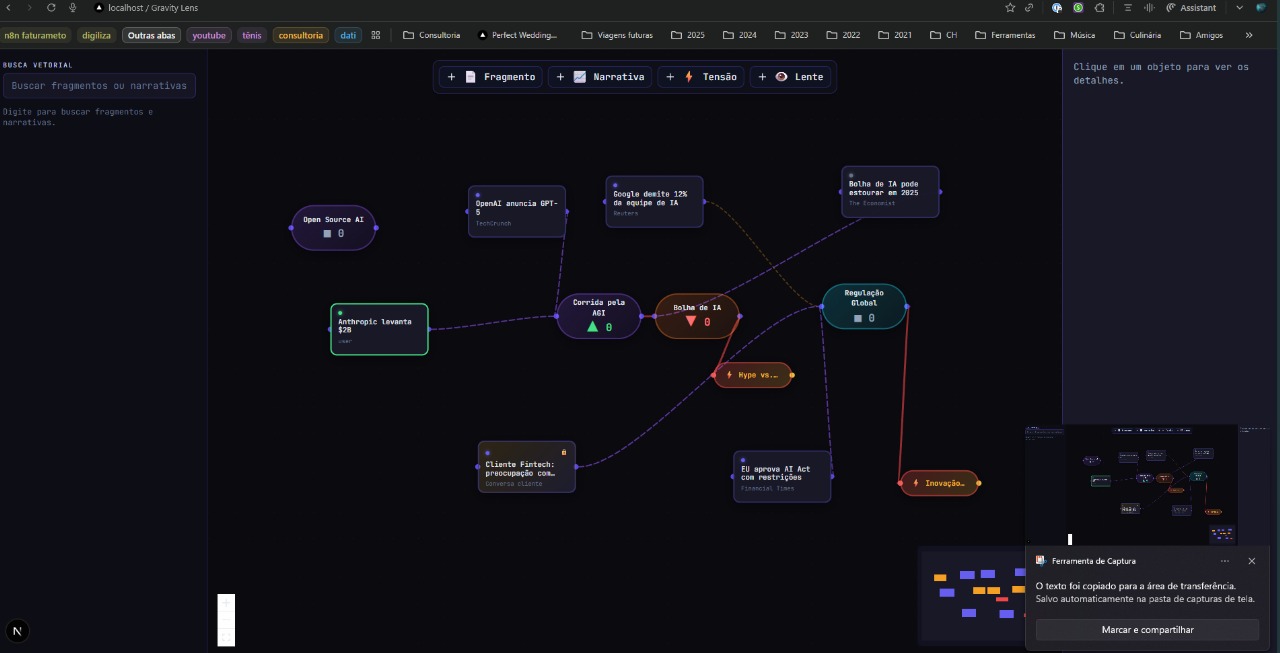
As an example, using my custom Spec-Driven Development agents, with just one round of specification I built a news and narrative exploration app with:
- Crawlers and agents to capture news
- A Neo4j-based database
- Graph rendering using NextJS and RectFlow components
This speed is also an ally for people with little free time, who couldn’t afford to spend an entire weekend on a passion project before, and can now watch it take flight in minutes.
Insight
Given this context, we can draw an important insight: Project-based Learning has become more relevant than ever and an even more powerful tool for personal exploration.
Any idea can serve as the substrate for new software that can be made real in the blink of an eye.
Likewise, any existing project easily becomes a Breakable Toy. Just open a branch in the repository and let your imagination run wild. Some ideas that are possible today:
- Migrate a project to another framework
- Switch databases
- Implement a feature that would take weeks in one or two hours
- Build a suite of custom-made tools for personal use
- What’s the limit of your imagination?
Another important point is that throughout the whole build process, even while you’re delegating the heavy implementation to the agent, you can ask questions, interrogate the agent, clear up doubts, explore concepts, and discuss implementations. It’s up to you to make the process more active.
Insights for learning better in 2026
Below, I’ve compiled a few points I believe are valuable for anyone who wants to learn more and faster.
Insight 1: Be bold
Don’t let past experiences stand between you and your goals. No matter how hard it is, more than ever, it can be done.
It’ll help a lot to study prompt engineering and context engineering, test different models in practice, and learn to use an agent well, like Claude Code or Open Code.
Insight 2: Ask, ask, ask
Children have this incredible quality of being endlessly curious. I believe it’s essential and valuable, at this point in history, to recover that quality.
With AI assistants in our pockets all the time, there are no more convincing excuses to put things off and sweep questions under the rug.
For quick questions, Perplexity is the best. It has a trait I find amazing: it encourages you to keep exploring the topic. Another wonderful tool is ChatGPT’s voice mode, which allows up to 40 minutes of uninterrupted conversation on the Pro plan.
To explore complex topics, use features like Deep Research, available in tools such as Gemini, ChatGPT, Claude, and Perplexity. They can generate relevant context to kick off a new project and point it in the right direction.
Asking questions is a habit that can be cultivated. Cultivate it.
Insight 3: Master your tools
Becoming proficient with these tools will give you superpowers and put you ahead of so many others who don’t go as far.
“Know Your Tools” is a well-known principle presented by Andrew Hunt and David Thomas in the book The Pragmatic Programmer: From Journeyman to Master.
Final thoughts
The goal isn’t to have good ideas; the goal is to have bad ideas. Because once you have enough bad ideas, some good ones are bound to show up. — Seth Godin
To wrap up, I’ll leave you with a thread from Andrej Karpathy on X, where he argues that there’s now a whole new layer of tools to be mastered: